
A small nail problem can quietly turn into something far more serious. Especially when diabetes is part of the picture.
An ingrown toenail does not usually start dramatically. A bit of pressure. Slight discomfort when walking. Easy to brush off. But the body does not always respond the same way when healing is slower and sensitivity is reduced.
That is where things shift. And why ingrown toenail treatment needs a different level of attention for diabetics.
On the surface, an ingrown nail seems manageable. The edge of the nail presses into the skin, causing irritation. In most cases, it settles with time or basic care. With diabetes, the story changes.
Circulation may not be as strong, which means the body takes longer to repair even small wounds.
Add to that reduced sensation in the feet, and problems can go unnoticed for longer than they should. You might not feel the warning signs until the skin is already inflamed or infected.
That delay is where risk builds. What could have been a quick fix becomes something that needs proper ingrown toenail treatment.
It never begins with sharp pain. Sometimes it is just a tender spot along the nail edge. The skin may look slightly red. Shoes start to feel uncomfortable in a way they did not before. Small changes, easy to ignore on a busy day.
Give it time, though, and those signs deepen. Swelling creeps in. The area becomes warm. In some cases, fluid or pus appears. Catching it early makes everything easier. Waiting tends to complicate things.
There is a natural instinct to deal with it yourself. A quick trim. Maybe trying to lift the nail. It feels like a simple fix. That is where many people go wrong.
Gentle steps can help in mild cases. Soaking your foot in warm water softens the skin and eases discomfort. Keeping the area clean matters more than most realise.
Footwear also plays a part. Tight shoes press the nail deeper into the skin, so switching to something more comfortable can reduce pressure straight away.
But anything involving sharp tools or digging into the nail should be avoided. One small cut can open the door to infection, and for diabetics, that is not something to take lightly. When in doubt, stepping back is the safer move.
Some situations are clear signals to stop home care. Pain that does not ease. Swelling that keeps increasing. Skin that looks red, or starts leaking fluid. These are not things to manage casually.
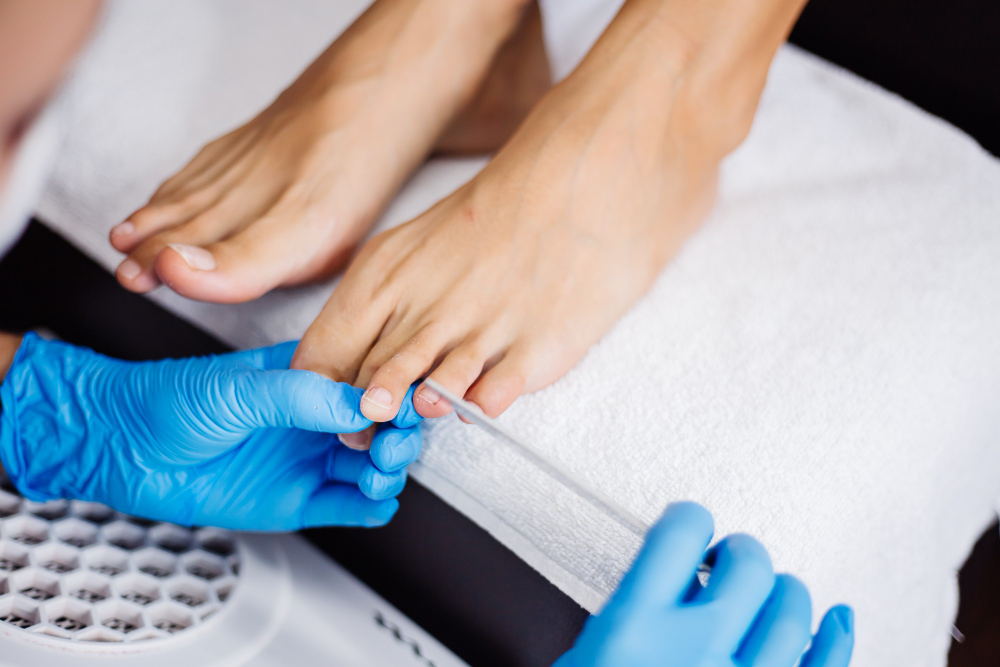
At that point, proper ingrown toenail treatment becomes necessary. A podiatrist will not rush the process. They will assess the toe, reduce pressure on the nail, and, if needed, remove a small portion of it. The goal is simple: relieve the problem without creating new risks.
In recurring cases, a more permanent solution may be suggested so the nail does not keep growing into the skin. It is usually a minor procedure, but one that needs to be done properly.
A few small habits can save a lot of trouble later. Nail trimming is one of them. Straight across works best. Rounding the corners might look neat, but it often encourages the nail to grow into the skin. Cutting too short can do the same.
Footwear is another factor people underestimate. Shoes that squeeze the toes create constant pressure. Over time, that pressure changes how the nail grows.
Then there is the simple act of checking your feet. It takes a minute. A quick look each day can catch changes before they turn into problems. For anyone dealing with reduced sensation, this step is important.
Managing foot health with diabetes is not something to leave to chance. That is where services like Fabulous Foot Care come in. Not to provide relief at the end, but as a continuous encouragement.
Frequent checking, proper nail treatment, and prompt treatment all minimize the chances of complications.
An ingrown toenail does not demand attention straight away. That is part of the problem.
Left alone, it builds quietly. For diabetics, that silence can be misleading.
Pay attention early. Avoid quick fixes that do more harm than good. And when something feels off, get it looked at. Simple decisions at the right time make all the difference. Contact Fabulous Foot Care for quick and reliable ingrown toenail treatment.
Not a good idea. Pain is not always a reliable signal with diabetes. Even mild cases should be watched closely.
Slower healing and reduced blood flow increase the chances. Small wounds can become infected faster than expected.
They can help in early stages, but they are not a complete solution if the nail is already embedded.
If you are experiencing pain, redness, or discomfort from an ingrown toenail, a professional assessment can help determine whether non-surgical treatment, including Onyfix®, is right for you.
📞 Call today to book an ingrown toenail assessment with a Foot Care Nurse in Alberta.